Liberty University · Division of Student Affairs

Student Affairs
Gathering

A proposal to establish a recurring, division-wide gathering and the planning board needed to carry it forward.

Inaugural target · Third week of January 2027
Proposal team
Sheldon Farrington
Sheldon FarringtonProposer
Jennifer Nodal
Jennifer NodalProposer
Zach Fiori
Zach FioriProposer
Christen Turner
Christen TurnerProposer
Executive introduction

A practical structure for division-wide connection.

Given the planning required for a networking and development event serving all members of Liberty University Student Affairs, we propose establishing an intra-divisional planning board to coordinate an inaugural gathering in January 2027.

The board distributes the work across departmental strengths, gives participating offices a meaningful role in the event, and creates a standing team for future conference opportunities. The gathering itself gives employees time to understand one another’s work, reconnect their daily responsibilities to Liberty’s mission, identify useful partnerships, and recognize staff whose contributions are often unseen.

Goals

Make the division more visible to itself.

Divisional identity

Employees often identify first with their office and may have little occasion to see how their work fits within Student Affairs as a whole.

Meaningful inclusion

Prior gatherings did not always include every relevant department or give participating offices a meaningful role in shaping the experience.

Practical familiarity

Employees do not always know who works in neighboring departments, what those departments offer, or where a student should be referred.

First-year standard

The first gathering must be useful, well-paced, and worth employees’ time. Interest in the next gathering should be earned.

Connect Student Affairs Colleagues

Create time for colleagues to meet, understand one another’s work, and form relationships that continue after the gathering.

Align Around the Student Experience

Identify overlapping work, clarify shared resources, and find practical opportunities to support one another in serving students.

Celebrate Divisional Progress

Recognize the work completed across the division and the staff whose contributions often happen outside public view.

Proposal 1 · Planning Board

Establish a Lean Planning Board

Six chairs coordinate the full planning cycle. Each chair owns a defined area, makes routine decisions within that area, and brings cross-functional questions to the board.

Executive Chair

Owns the overall vision, accountability structure, timeline, budget coordination, and executive alignment.

Responsibilities
  • Establish the annual purpose, objectives, and measures of success.
  • Lead planning-board meetings and maintain a useful meeting cadence.
  • Build and monitor the master project timeline.
  • Track budget allocations, approvals, and unresolved financial questions.
  • Resolve cross-functional issues and clarify decision ownership.
  • Serve as the primary liaison to Student Affairs leadership.

Communications & Engagement Chair

Owns division-wide communication and coordinates department participation in the expo.

Responsibilities
  • Develop the communication calendar and message sequence.
  • Coordinate invitations, RSVPs, reminders, surveys, and follow-up.
  • Manage promotional copy, event information, and attendee instructions.
  • Serve as the principal contact for department expo leads.
  • Set booth expectations, deadlines, content guidance, and submission needs.
  • Keep event language and visual identity consistent across materials.

Operations & Production Chair

Owns venue logistics, technical systems, room flow, and operational readiness.

Responsibilities
  • Reserve venues and coordinate facility access and use.
  • Coordinate audiovisual support, staging, lighting, and technical needs.
  • Develop room layouts, traffic flow, and transition plans.
  • Coordinate Campus Production and outside vendors when necessary.
  • Oversee setup, teardown, storage, and day-of readiness checks.
  • Prepare contingency plans for technical or operational disruptions.

Programs & Experience Chair

Owns the program arc, schedule, main-stage content, and attendee experience.

Responsibilities
  • Develop the annual theme and translate it into the session plan.
  • Build the event schedule and detailed run of show.
  • Coordinate speakers, video contributors, hosts, and participants.
  • Develop activities, transitions, and audience-engagement moments.
  • Ensure each program element supports the gathering’s stated purpose.
  • Work with Operations to test timing and production feasibility.

Hospitality & Environment Chair

Owns food service, atmosphere, signage, and the physical welcome extended to attendees.

Responsibilities
  • Coordinate catering, service timing, quantities, and dietary needs.
  • Develop the décor and environmental direction.
  • Plan seating, high-top tables, food stations, and hospitality touchpoints.
  • Coordinate visual signage with Communications and room plans with Operations.
  • Manage hospitality vendors, rentals, and related budget needs.
  • Review the environment for accessibility, comfort, and ease of movement.

Partnerships & Support Chair

Owns department relationships, event staffing, and coordination beyond the six-member board.

Responsibilities
  • Recruit and coordinate event staff and support personnel.
  • Maintain relationships with participating offices and campus partners.
  • Build staffing schedules and assign day-of responsibilities.
  • Prepare support personnel with clear expectations and points of contact.
  • Coordinate check-in, wayfinding, and other attendee-support functions.
  • Lead staff appreciation and assist with post-event feedback collection.
Proposal 2 · The Annual Gathering

Three sessions with different jobs to do.

The day moves from shared context, to direct interaction, to a closing experience that tests what employees learned and leaves the division with a common memory.

01

Introducing Student Affairs

35–45 minutes · Audience-style opening

Leadership remarks and short department-introduction videos explain why the division is gathering, connect the day to Liberty’s mission and student development model, and tell attendees how to participate.

Session emphasis
  • Dr. Mark Hine frames the “why” and vision for gathering as one division.
  • The session acknowledges the Student Affairs restructure and introduces the shared statement: “We are Student Affairs.”
  • The Student Development Model connects the division’s work to a common approach to serving students.
  • Department leaders offer brief remarks that introduce their teams, responsibilities, and contribution to the student experience.
  • Attendees leave with a clear understanding of the day’s purpose and how the following sessions will unfold.
Employees listening during a large presentation
02

Interdepartmental Expo

90 minutes · Reception, lunch, and discovery

LaHaye Courts becomes a reception space where employees can eat lunch, meet colleagues, and learn how other offices serve students.

Session emphasis
  • A hospitality and dining zone supports lunch through heavy hors d’oeuvres, multiple buffet lines, and nearby seating.
  • A department showcase zone gives each office a booth for staff introductions, programs, services, and common referral questions.
  • Round tables and high-top tables create distinct conversation zones for seated meals, brief introductions, and longer discussions.
  • Light engagement activities—such as prompts, a passport, or department discovery cards—encourage movement throughout LaHaye Courts.
  • The room gives employees a clearer answer to two questions: “What does this office do for students?” and “When should I connect a student or colleague with them?”
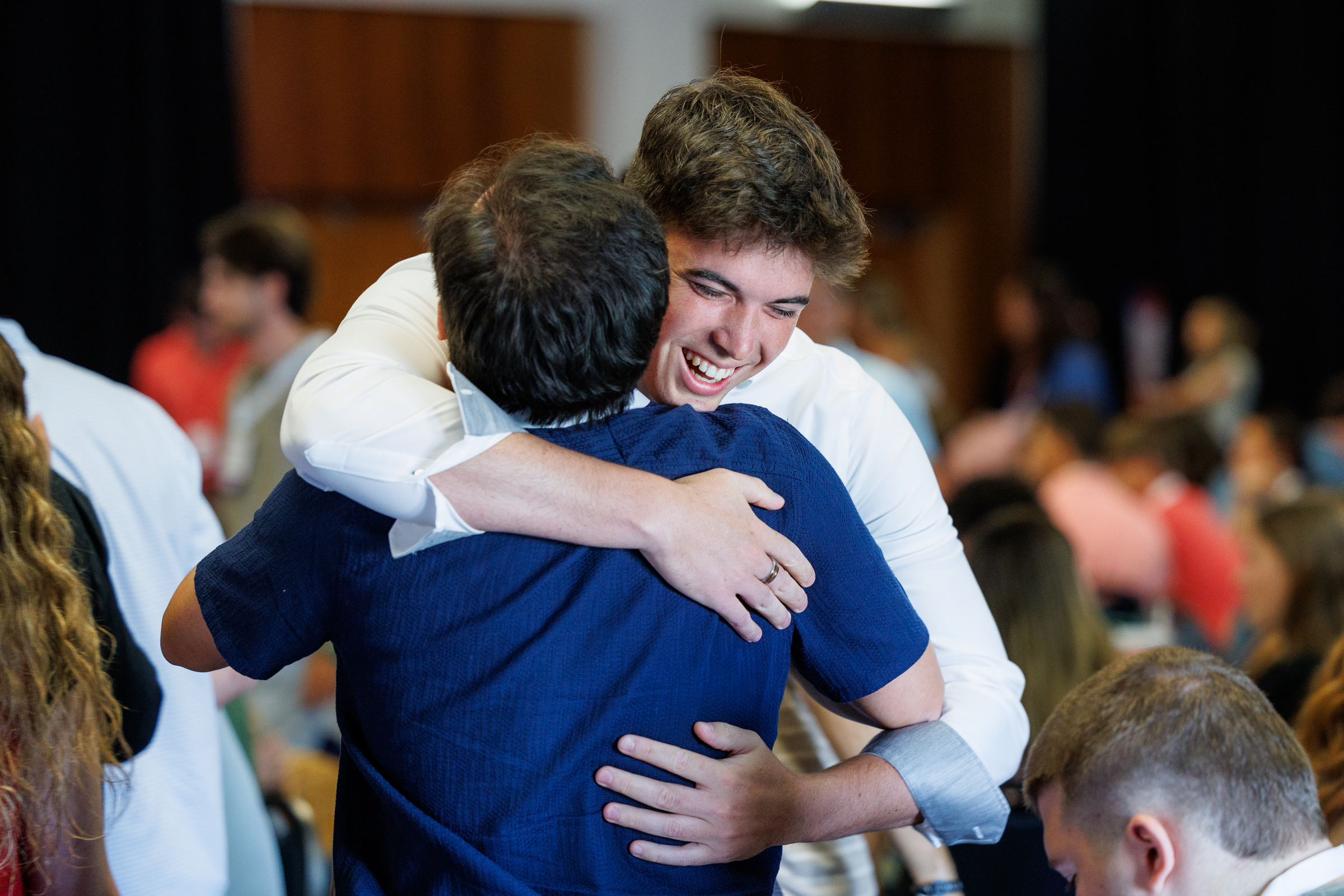
Two attendees greeting one another at a gathering
03

Student Affairs Live

50–60 minutes · Game-show closing

An engaging host leads two five-person “families” through a Family Feud-style competition about Liberty students and the work of Student Affairs. Survey responses and verified department information make the answers both entertaining and useful.

Session emphasis, sample questions, and teams
  • The host opens each survey round with: “We surveyed 100 Liberty community members, and…” before presenting the question.
  • Survey answers reveal what students and employees know, value, notice, or misunderstand about the Liberty student experience.
  • Verified department and Liberty facts add rounds with clear answers alongside the survey-based questions.
  • Audience participation, answer reveals, and brief explanations reinforce useful information without turning the session into a lecture.
  • The closing charge connects better knowledge of the division to better care and support for students.

Sample question bank

Student tastes: “We surveyed 100 Liberty community members: name a campus experience that most helps students feel connected.”

Department practices: “Name a situation in which an employee should connect a student with CARE and Support.”

Programs: “Name a Campus Recreation program or facility that a new student may not know about.”

Liberty facts: “Name a question Student Life hears frequently during move-in or the opening weeks of a semester.”

Blue Family · Illustrative

  1. Campus Recreation & Logistics
  2. LU ONE
  3. Student Affairs Assessment
  4. Residence Life
  5. Student Government Association

Balances operations, belonging, assessment, residential experience, and student representation.

Red Family · Illustrative

  1. Dean of Students
  2. Office of Student Life
  3. Community Life
  4. CARE and Support
  5. Commuter, Graduate & Online Life

Balances student care, formation, conduct, support, and non-residential student experience.

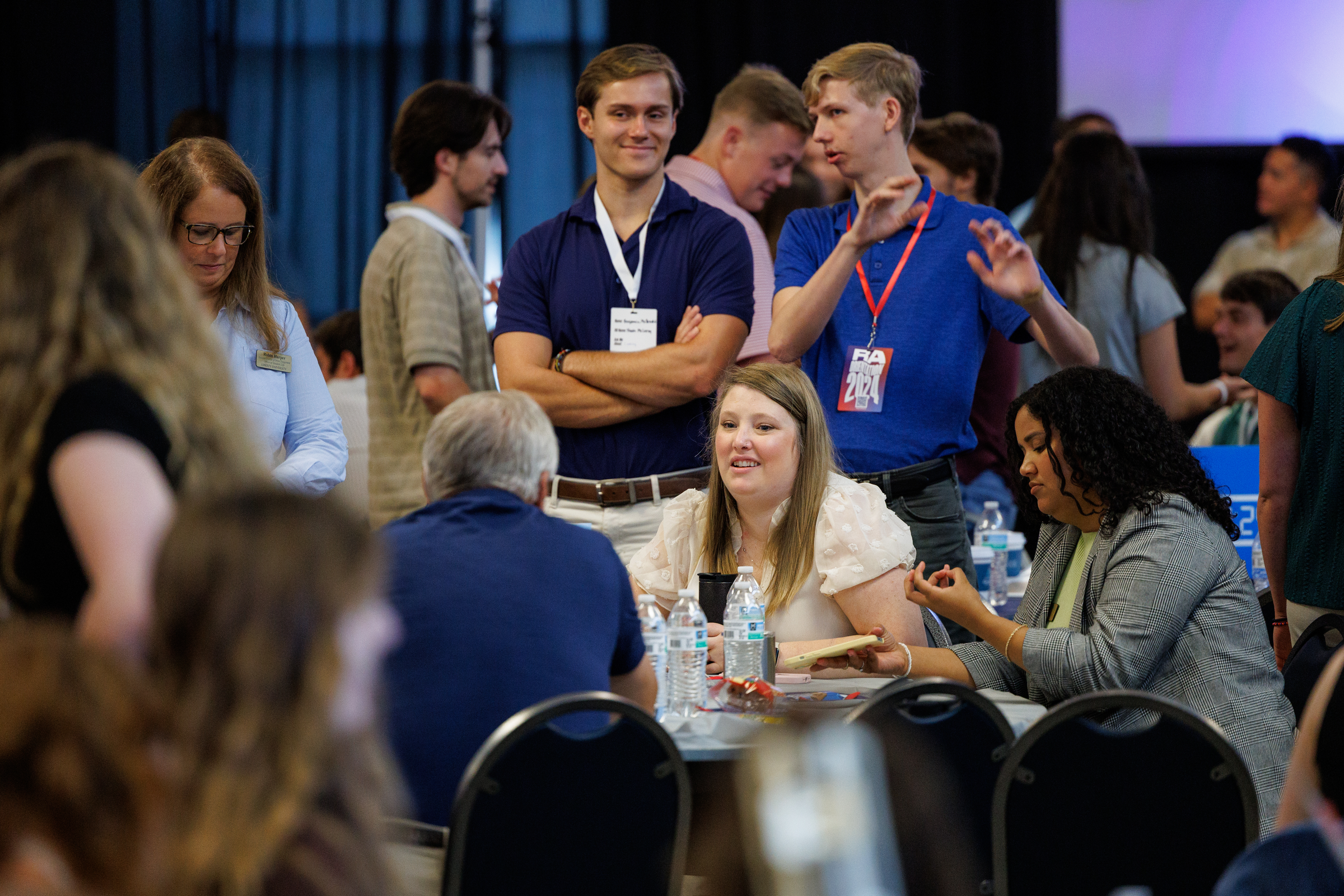
Employees talking in groups during an event

Sample attendee agenda

Welcome & Introducing Student Affairs
LaHaye Event Space · Vision, departmental introductions, and orientation for the day.
Interdepartmental Expo Reception
LaHaye Courts · Lunch, department discovery, and cross-office conversation.
Student Affairs Live
LaHaye Event Space · Game-show competition, recognition, and closing charge.
Conclusion
LaHaye Event Space
Implementation roadmap

Proposed Timeline.

Mid–late October

Approval and foundation

Dustin Dubose seeks approval from Mark Hine; Student Affairs Leadership reviews the proposal. Establish the board, preliminary budget parameters, event purpose, authority boundaries, and meeting cadence.

November

Board launch and teaser

Confirm venue and working event identity. Assign chair responsibilities, open department conversations, identify production constraints, and release a short teaser that establishes the date and purpose.

December

Build the experience

Finalize session flow, speakers, videos, expo expectations, food service, room layouts, production requirements, host selection, question-development process, staffing needs, and attendee communication.

Early January

Prepare for execution

Conduct venue walkthroughs and rehearsals. Confirm participating departments, staffing, catering counts, technical cues, signage, Family Feud teams, verified questions, and attendee instructions.

Third week of January 2027

Inaugural gathering

Execute the event, collect immediate feedback, conduct an after-action review, and preserve decisions, files, vendor information, and lessons for the next planning cycle.


Future opportunities

Build capacity beyond one annual event.

Conference readiness

A standing team develops the practical knowledge needed to host ACSD and other regional or national gatherings.

Peer-institution learning

The board can coordinate site visits and focused co-learning opportunities with peer institutions.

A shared divisional rhythm

Departments gain a predictable point around which to plan smaller training and collaborative work.

Better student referrals

Employees who understand neighboring offices can direct students more accurately and collaborate sooner.

Decision requested

Establish the board and give it the plan.

Authorize the six-chair planning board, set preliminary budget parameters, and entrust the board with this proposed framework for developing the inaugural Student Affairs Gathering.

Download the proposal PDF